

Safeguarding the Heart of the Cerulean Warbler’s World

A Tiny Traveler
The Remarkable Cerulean Warbler
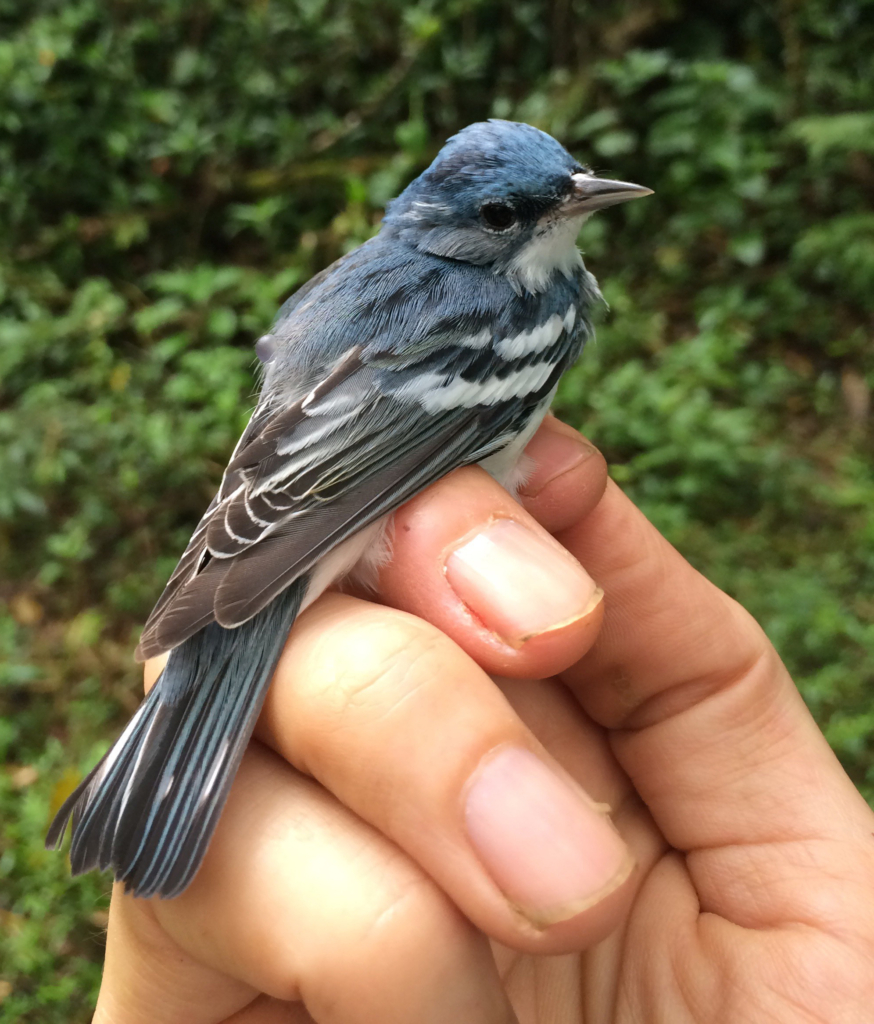
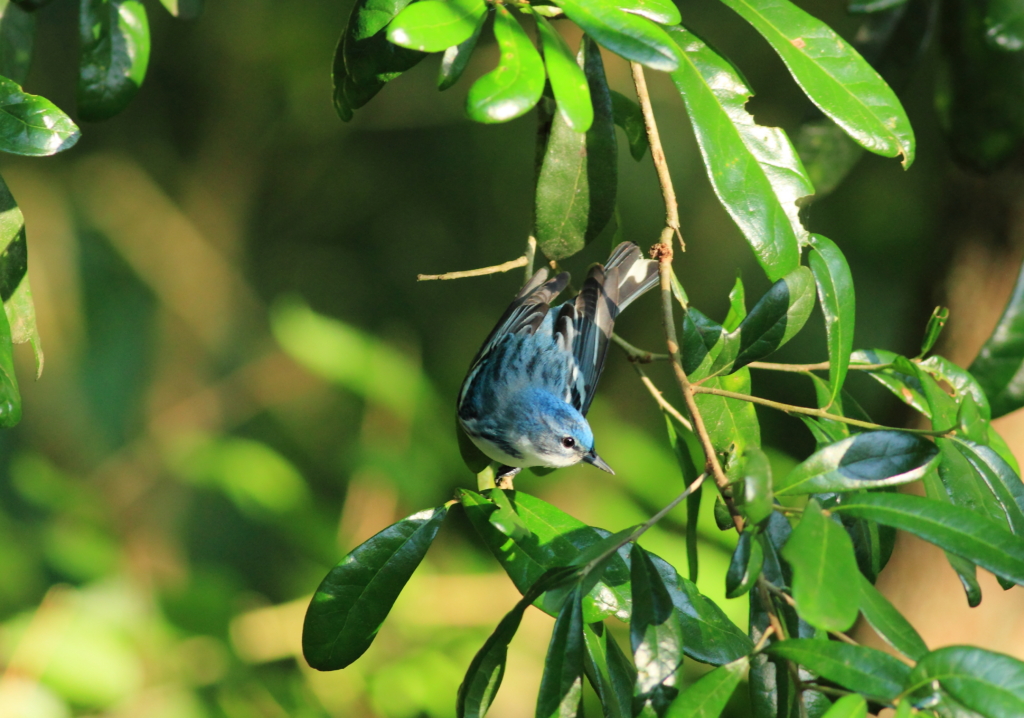
The Cerulean Warbler is a tiny neotropical migrant that arrives in Indiana in late April and departs early, often by August, making it one of the first forest breeders to leave the state. Despite measuring just over four inches long and weighing only eight to ten grams, it undertakes an impressive migration from its breeding range in the Midwest and Appalachians, through Central America to wintering grounds along the eastern slopes of the Andes.
Males are striking sky-blue with bold white wing bars, black wings and tail, and a dark blue “necklace” across the white breast. Females are more subdued, appearing aqua or sea-green with a pale eyebrow stripe and yellowish-white underparts. Because they spend most of their time high in the canopy, they are most often only seen from below.
The BirdScape
We’re Taking Action
Indiana is home to the highest percentage of the Cerulean Warbler’s total nesting population. In March 2025, the Southern Indiana Cerulean Warbler BirdScape (SICWB) was launched as a collaborative effort with experts from more than two dozen organizations across The Americas to help protect and manage Cerulean Warbler habitats.
Special Thank You
Our Partners
Our partnership network is bult through the dedicated work of 48 team members representing 29 different organizations and agencies, reflecting broad regional commitment to this conservation effort.
Click the partner logos below to learn more about each organization.